
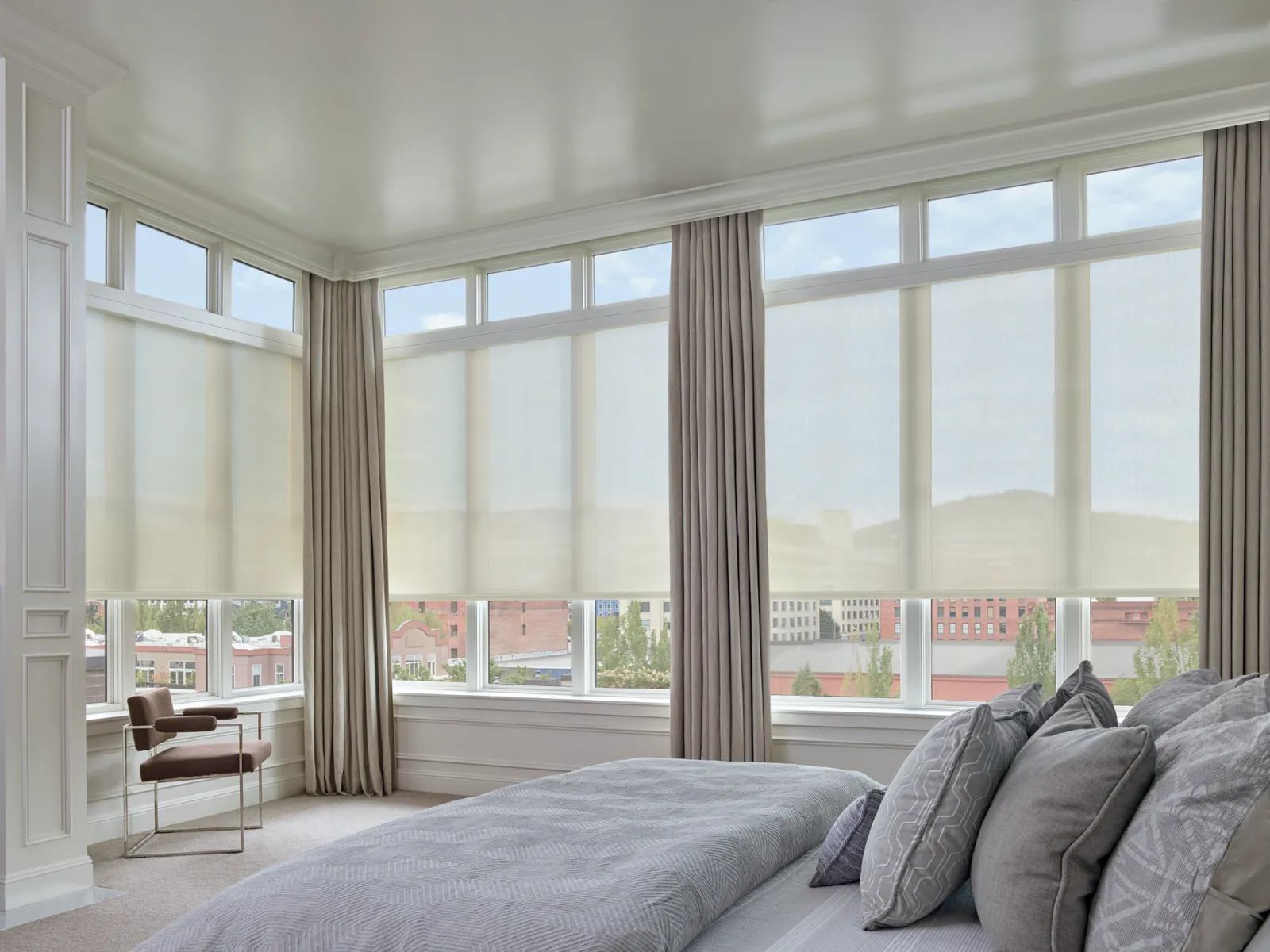
Protecting the interior without covering the view
The tension is straightforward. These houses face west over the water, which is exactly the orientation that does the most damage to floors, art and furniture. The obvious fix is to cover the glass, and the obvious fix is the one nobody wants.
Solar screens are the answer that does not force the choice. An open-weave mesh cuts glare and blocks the large majority of ultraviolet while remaining transparent enough to see straight through. At a 3% openness the view is clearly usable; at 5% it is barely diminished.
One thing to plan for: a solar screen is transparent from inside during daylight and reverses after dark, so it gives no evening privacy. On bedrooms and any room used at night we pair it with a blackout roller on a second bracket. Two treatments on one window, each doing the job it is actually good at.
Coastal hardware, specified properly
This is oceanfront. Salt exposure is at its most aggressive, and it is relentless rather than seasonal.
Everything we fit here is specified with that in mind: corrosion-resistant hardware, powder-coated finishes rather than paint, composite in place of hardwood, and fabrics that are solution-dyed so the colour is in the fibre rather than sitting on it. We will not fit standard mainland hardware in an oceanfront room, because we would be back to replace it.
Motorised treatments need the same consideration. The motor lives inside the headrail and is well protected, but the bracketry and fixings are not, and those are what fail first if the wrong ones are used.
Working around resort requirements
Homes within the resort are frequently subject to design guidelines about what is visible from outside, and often about consistency across a facade.
We deal with this routinely. Composite shutters and quality roller fabrics come in the neutral exterior colours these guidelines usually require, and they hold that colour rather than yellowing, which is what eventually puts a cheaper product out of compliance.
If your association wants a submission before installation, tell us at the consultation. We can supply finish samples and a written specification for the review committee.
Where we work in Mauna Kea
Neighborhoods
Mauna Kea Resort · Kauna'oa · Wai'ula'ula · Hapuna Estates · Kumulani · Waimea-side approaches
ZIP codes served
96743
What we install in Mauna Kea
Mauna Kea questions
- Do you charge extra to come out to Mauna Kea?
- No. Mauna Kea is inside our regular service area and the in-home consultation is free. We batch appointments by area so our team works a full day in one place, which is how we avoid a travel charge on an island where everything is a drive.
- How long does an installation in Mauna Kea take?
- Most whole-home installations are done in a single day. Large openings and specialty shutters can run into a second visit, and we tell you which applies before you order rather than on the day.
- What is the lead time?
- Typically three to five weeks for blinds and shades, and five to seven for custom shutters. Everything is made on the mainland and shipped over, so island lead times run a little longer than a mainland quote would suggest. You get a real date at the point of order.
- Can I keep the ocean view and still control the sun?
- Yes, and it is the most common brief we get here. A solar screen at 3% openness cuts most of the glare and UV while staying transparent enough to see through properly. For evening privacy, add a second blackout treatment on the same window rather than compromising the daytime one.